
The return of one of India’s rarest wild cats to Kuno National Park has been hailed as a conservation milestone. The harder question is whether the landscape can support more than a fleeting appearance.
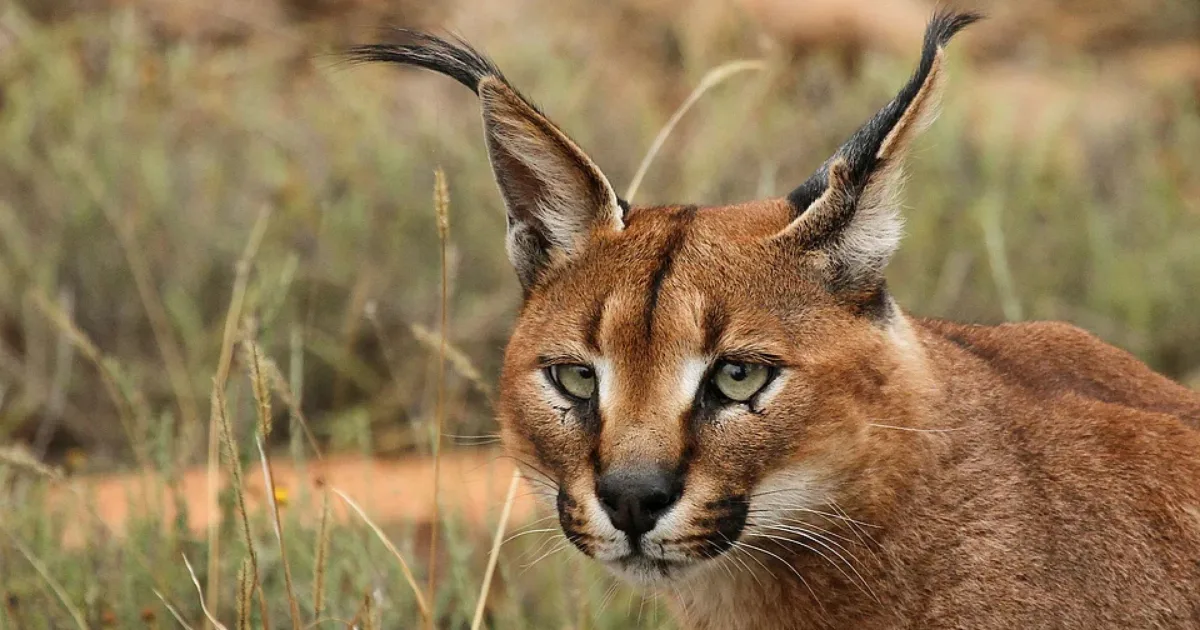
On World Environment Day, a camera trap inside Kuno National Park caught a shape that Indian conservationists seldom see at all: a caracal, its black ear tufts standing upright against the scrub. The image, released by Madhya Pradesh’s government on 5 June, was quickly framed as evidence that Kuno’s much-scrutinised restoration work is paying off. It may be. But one photograph, however welcome, does not amount to a comeback.
The caracal is one of India’s most elusive cats, a lithe, long-legged predator of dry grasslands, scrub and open woodland. Across much of Africa it is far from rare. In India, it is another matter entirely. Estimates vary, but conservationists broadly agree that the national population is perilously small and scattered, with remnant animals clinging on in parts of Rajasthan, Gujarat and central India.
That is what makes Kuno’s sighting noteworthy. Not because the species has suddenly materialised from nowhere, but because it offers a glimpse of a landscape that may still be capable of supporting it.
Why this sighting matters
Kuno, in Madhya Pradesh’s Sheopur district, is now known internationally as the epicentre of Project Cheetah, India’s attempt to establish a free-ranging population of African cheetahs seven decades after the Asiatic cheetah vanished from the country. The project has attracted no shortage of political fanfare, scientific scrutiny and, in some quarters, scepticism.
Yet the caracal image has shifted the conversation, if only briefly, away from cheetahs and towards the habitat beneath them.
Caracals do not need dense forest. They favour open, broken country: grassland, thorn scrub, ravines, rocky slopes. These are precisely the kinds of habitats that India has historically undervalued. Large tracts of grassland and scrub have long been classified administratively as “wasteland”, a bureaucratic sleight of hand that has made them easier to convert for farming, infrastructure and industrial use.
That, more than anything, is the context for this story. The caracal is not simply a rare cat. It is a barometer for the health of India’s neglected open natural ecosystems.
“A sighting offers a clue, not a sign of recovery,” Dharmendra Khandal of Tiger Watch told Mongabay India last year, after another caracal was photographed in Madhya Pradesh, this time at Gandhi Sagar Wildlife Sanctuary. Khandal knows the species’ dry-country haunts well, and his caution applies neatly to Kuno too. A camera trap confirms presence. It does not tell us whether the animal is resident, whether there are others, or whether any are breeding.
That distinction matters.
The cat that slipped through the cracks
The caracal has never enjoyed the institutional attention lavished on India’s tigers, lions or rhinos. It is listed under Schedule I of the Wildlife Protection Act, 1972, which gives it the country’s highest level of legal protection. In 2021, India’s environment ministry included it in a species recovery programme for 22 highly threatened animals.
But protection on paper is not the same as conservation in the field.
For years, the caracal’s problem has been less persecution than invisibility. It lives in landscapes that do not fit India’s dominant conservation imagination. There are no grand, forested tiger reserves built around it. No national flagship campaign. No tourism economy pressing for its survival. The species has persisted largely in the margins, in dry country where ecological value is too often noticed only after it has begun to disappear.
Indrajit Ghorpade, a conservationist who has followed the species closely, has argued that reports of the caracal’s “return” can be misleading. The animal may not have vanished from Kuno at all. It may simply have gone unrecorded, or at least unpublicised, in a region where survey effort has historically focused elsewhere.
That is not pedantry. It goes to the heart of how conservation evidence works. Absence of records is not the same as absence of animals.
What Kuno may be telling us
Even so, the Kuno photograph should not be dismissed. If the cat is using the park, that suggests something important about the state of the habitat.
Over the past few years, Kuno has undergone extensive management under Project Cheetah. Water points have been restored and supplemented. Prey populations have been monitored. Protection has intensified. Human disturbance in key areas has been reduced. Much of this work was done with cheetahs in mind, but ecosystems are rarely so obliging as to benefit only one chosen species.
Officials in Madhya Pradesh have understandably seized on the caracal image as evidence that Kuno’s ecological restoration is having wider effects. That claim is plausible. A medium-sized predator such as a caracal needs prey, cover and a functioning patchwork of open habitat. If it is moving through Kuno, the landscape is at least providing some of those ingredients.
But plausible is not the same as proven.
Ravi Chellam, a conservation scientist and coordinator at the Biodiversity Collaborative, has been one of the more forthright critics of overclaiming in India’s cheetah project. His central argument is that isolated milestones, whether births, translocations or sightings, should not be confused with evidence of a self-sustaining wild population. The same discipline applies here. The question is not whether a caracal appeared on a camera trap. It did. The question is whether Kuno and the wider landscape can support a viable population over time.
That is a much harder thing to demonstrate.
Grasslands: the real conservation story
If there is a lesson in the Kuno caracal, it is that India’s grasslands and scrublands need rescuing from their second-class status.
This is a familiar complaint among grassland ecologists, but it remains a necessary one. Open natural ecosystems are often treated as land awaiting improvement, rather than as ecosystems in their own right. Yet they support some of the subcontinent’s most threatened wildlife, from the great Indian bustard to the Indian wolf, striped hyena, lesser florican and, of course, the caracal.
The irony is hard to miss. India has spent vast sums and considerable political capital on bringing cheetahs back into a grassland landscape, while many of the species already dependent on those same landscapes continue to receive only a fraction of the attention.
That is beginning to change, albeit slowly. In Rajasthan this year, forest authorities launched a dedicated Project Caracal at Ranthambore, backed by the Wildlife Institute of India and Tiger Watch, with plans for extensive camera-trap surveys and habitat assessment. It is a sensible step. The species does not need reverence. It needs data, habitat security and a management plan rooted in the ecology of dry country.
Kuno should now be folded into that wider effort.
What happens next
The next step is not more rhetoric about a “return”. It is systematic fieldwork.
Conservationists need to know how many caracals, if any, are using the Kuno landscape; whether they are transient animals dispersing through a broader corridor that includes Gandhi Sagar, Chambal and perhaps even Ranthambore; and what prey, vegetation structure and disturbance levels those animals are responding to. That means camera-trap grids designed for small carnivores rather than charismatic headline species. It means occupancy surveys. It means long-term monitoring rather than celebratory posts on social media.
It also means asking awkward questions about land use outside protected areas. Kuno alone will not save the caracal. The species survives in mosaics of scrub, ravines, pasture and agricultural edges. If those surrounding landscapes continue to be fragmented or “improved” out of ecological usefulness, the occasional image from inside a national park will remain just that: occasional.
There is, then, a quiet significance to the Kuno photograph. It hints that the park’s restoration may be doing something useful beyond the cheetah headlines. It reminds us that conservation success is sometimes measured not in the return of the famous, but in the persistence of the overlooked.
Still, a caracal in a camera trap is not a verdict. It is a question, and quite a pointed one: after all the money, ambition and argument poured into Kuno, can India now show the same seriousness towards the grassland species that were there all along?