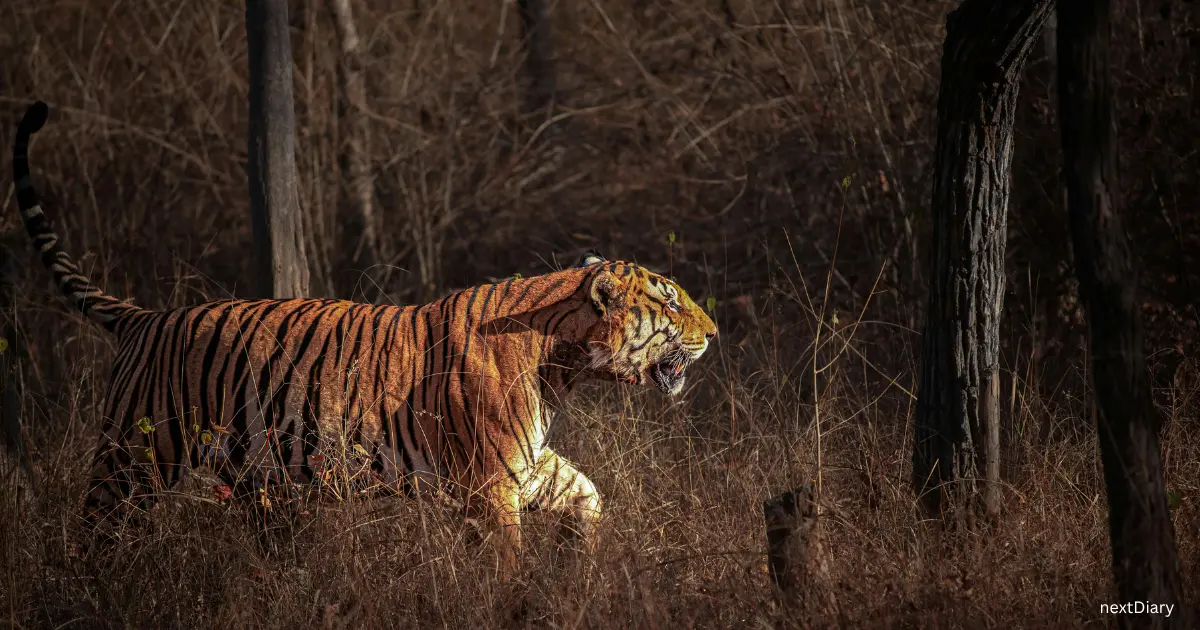

The release of a third translocated tigress into Maharashtra’s Sahyadri Tiger Reserve is more than a feelgood relocation story. It is a high-stakes attempt to rebuild a breeding tiger population in a landscape that had, by the last national count, none at all.
In early February, a four-to-five-year-old tigress stepped out into the Koyna Wildlife Sanctuary, the dense, folded western half of Maharashtra’s Sahyadri Tiger Reserve. She had travelled nearly 900 kilometres from Pench, crossed the state in a transport cage and arrived with a new name, Hirkani. Officially, she is STR-06. Unofficially, she is one more gamble in an effort to return tigers to a reserve that, not long ago, had lost them altogether.
Hirkani is the third tigress moved into Sahyadri under Operation TARA, short for Tiger Augmentation and Range Expansion. The programme, led by the Maharashtra Forest Department with scientific input from the Wildlife Institute of India and oversight under India’s National Tiger Conservation Authority, is designed to do something deceptively simple and logistically awkward: seed a viable breeding population of tigers in the northern Western Ghats.
The awkwardness matters. Sahyadri is not an empty box into which one can neatly place a tiger and expect nature to get on with it. It is a 1,165 sq km reserve spread across Satara, Sangli, Kolhapur and Ratnagiri districts, stitched together from Chandoli National Park and Koyna Wildlife Sanctuary, all steep escarpments, damp valleys and heavy forest. Tigers once ranged here more freely. By the 2022 All India Tiger Estimation, however, Sahyadri was among the reserves recording zero tigers.
Why Sahyadri needs imported tigresses
That absence is what Operation TARA is trying to correct.
The plan, approved by the Union environment ministry, allows Maharashtra to translocate up to eight tigers, five females and three males, from better-stocked reserves including Tadoba-Andhari and Pench into Sahyadri. The logic is ecological rather than theatrical. Female tigers are the anchors of any population. If they settle, establish territories and breed with dispersing or resident males, a population can begin to root itself. If they do not, the project risks becoming an expensive exercise in moving cats around the map.
The first two tigresses arrived from Tadoba in late 2025. Chanda, later designated STR-T4, travelled more than 900km to Chandoli and was soft-released after a short acclimatisation period. A second tigress, Tara, followed within weeks. Both were fitted with VHF or GPS collars and monitored as they adjusted to a very different landscape from the dry deciduous forests of eastern Maharashtra.
By April, forest officials said both had settled sufficiently for their collars to be removed. A month later, the Sahyadri Tiger Reserve’s field director, Tushar Chavan, said officials suspected both tigresses may have mated and could be pregnant, though that remained under watch rather than confirmation. If cubs do arrive, they would represent the reserve’s first real foothold as a breeding tiger landscape rather than a corridor visited by dispersers.
Girish Punjabi, a wildlife researcher quoted by Hindustan Times, called that prospect encouraging because it could bring gene flow between central Indian tigresses and a male thought to have dispersed from the southern Western Ghats. In tiger conservation, that is not a technical footnote. Genetic mixing is one of the things that stops small, isolated populations from quietly unravelling.
The science of a soft release
None of this works if the animals simply walk out and keep walking.
That is why translocated tigers are often “soft-released” into temporary enclosures before entering the wider forest. The method is meant to help them familiarise themselves with prey, water, terrain and the general business of being a tiger in a new landscape before the door is opened for good. Tara, the second tigress moved from Tadoba, spent time in the Sonarli acclimatisation enclosure in Chandoli National Park before release. Hirkani’s move to Koyna followed the same general logic: veterinary checks, transport, controlled release, then monitoring.
It is the sort of detail that can sound procedural until one remembers what is at stake. A tiger that fails to settle may stray into villages, clash with resident carnivores, or simply disappear into unsuitable habitat. A tiger that does settle can begin doing the less glamorous work of conservation success: making kills, scent-marking, mating, raising cubs and teaching them a forest that had forgotten what resident tigers look like.
Sahyadri is not short of prey. The reserve supports gaur, sambar, chital, mouse deer and other ungulates, alongside leopards and dholes. In other words, the pantry appears to be open. The question is whether the room is secure enough for a tiger population to stay.
A tiger project meets a corridor problem
This is where the story stops being a neat tale of one tigress and becomes a more awkward one about land use.
Tiger recovery is not just about how many cats can be shifted from one reserve to another. It depends on whether the landscape around them remains connected and protected. In Sahyadri, that is already under pressure. In April, reports emerged that the Maharashtra Forest Department had recommended excluding several villages from the proposed tiger corridor and eco-sensitive zone in parts of the Sahyadri landscape, prompting concern from conservationists and a query from the National Tiger Conservation Authority. Environmentalists warned that diluting protection could weaken movement routes and open the door to more disruptive land uses.
That matters because translocation is not a substitute for habitat security. It is a supplement to it.
A female tiger can be moved across the state with admirable precision, but she cannot be persuaded to ignore a fragmented corridor, a road, a mine, or a settlement that narrows the space through which tigers disperse. If Sahyadri is to become a functioning tiger landscape rather than a fenced conservation experiment, the wider Western Ghats matrix has to hold.
India’s tiger policy architecture understands this, at least on paper. The NTCA’s role is not simply to bless relocations but to ensure tiger reserves retain inviolate core habitat, functional buffers and scientifically defensible conservation plans. Operation TARA sits squarely within that framework. So, too, does the uncomfortable question of whether states are prepared to defend corridors when those corridors become inconvenient to local politics or development ambitions.
What happens next
For now, the signs from Sahyadri are promising rather than conclusive.
Three tigresses have been introduced. Chanda and Tara appear to have settled. Hirkani adds another breeding-age female to the equation. Forest staff are monitoring movements through camera traps, field tracking and the usual patient detective work of reading pugmarks and kill sites in thick forest.
But recovery projects have a habit of looking straightforward in press releases and untidy in the field. The northern Western Ghats are wetter, steeper and more broken than the tiger landscapes of central India from which these animals came. Human use of the land does not stop at reserve boundaries. And one breeding event, should it happen, would be a beginning rather than a verdict.
That, perhaps, is the fairest way to read Hirkani’s arrival. Not as the triumphant return of the tiger to Sahyadri, because that would be premature, but as evidence that Maharashtra is finally attempting something more serious than nostalgia. It is trying to rebuild an ecological relationship, one tigress at a time, in a forest that has spent years missing its top predator.
Whether the forest is ready to keep them is the harder question. Sahyadri now has three female answers pacing through its valleys. The landscape, and the politics around it, still have to respond.